
Digital printing has become a mature technology in label printing. Labels have become fertile ground for digital printing due to their smaller format equivalent to other packaging printing, a higher proportion of short runs than in other packaging markets, and the fact that the substrate is often easier to handle.
Almost all digital presses can produce pressure-sensitive labels. However, paper-based feeds are time-consuming, substrate options are limited and perhaps handling is more complex. Despite continued investment in label presses, the total share of all pressure-sensitive labels that are digitally printed remains relatively small, accounting for just over 6 per cent of all print. There is no shortage of dedicated label press suppliers. More than 30 vendors offer label presses, often with multiple models, a choice that can be confusing when compared to other packaging markets.
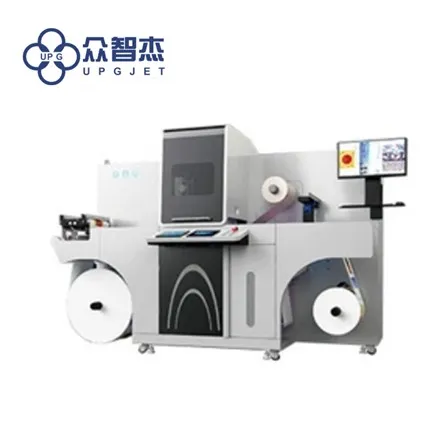
Our company also produces digital inkjet presses, such as this one, LQ-MD UV1040 Digital Inkjet Printing Machine
LQ-MD UV1040 high-speed automatic inkjet printer is the latest generation of high-speed inkjet printer, equipped with UV& Water-based piezoelectric head of Japan Ricoh, Konica and other types. This machine is suitable for digital inkjet printing of UV and water-based inks on a single sheet of paper. It is used in barcodes, two-dimensional codes, invisible codes, etc. Digital supervision and electronic traceability, so as to achieve applications such as refined management and intelligent. Optional printed matter detection, high work efficiency, more user-friendly operation.

Electrostatic imaging printers have been involved in the labelling sector since the 1990s, both in liquid and dry toner technology. The technology had an early start, but today only a handful of manufacturers offer full-production EP printers, while inkjet options are springing up. Despite this, figures show that inkjet accounts for only 20 percent of digital label printing sign-ups. Although this share is expected to increase.
Initially, inkjet grew in compact press design and fast print speeds but offered lower quality, however, quality has improved significantly in recent years and considerations when choosing an imaging technology include: inkjet print speeds are significantly faster for a similar amount of investment: EP tends to have finer detail and smoother transitions, especially when compared to 600dpi inkjet.
With higher resolution printheads, the difference is minimal; UV inkjet has a glossy appearance, which may be desirable for some applications but may be unacceptable for others; UV inkjet creates a raised surface, which can have a tactile effect, whereas aqueous and toner prints are essentially flat; inks are more abrasion- and chemical-resistant than toner; some substrates are better suited to toner than others. Some substrates are better suited to toner and some are more suited to inkjet; inkjet presses are simpler to build and typically require less maintenance than toner presses.
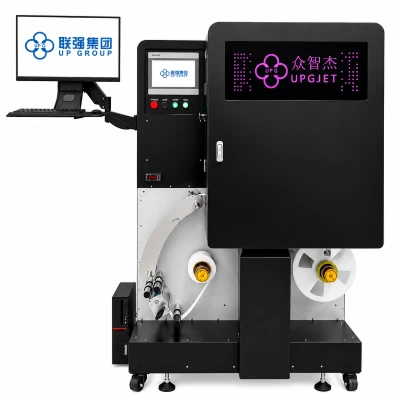
Inkjet label presses range from the smallest desktop models to complete hybrid lines, making comparisons difficult. The choice of inkjet presses allows shops to start small and grow with demand, even if they are new to label production or are starting to print merchandise producers. Established label printers may want to take over some short-run jobs from an analogue press and need the productivity of a high-volume or hybrid press. Higher-end presses also tend to be cheaper to run.
In short, there is no best technology and it all depends on the application requirements. Some printing companies use multiple technologies to provide the best solution. If you have any needs about inkjet printing machine, please contact our company in time, over the years, our company exports to all over the world, in terms of technology and quality we strictly control and gatekeeping, we believe that we can bring you high quality products and services.