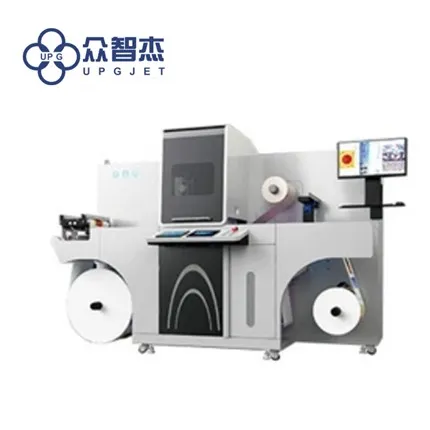

Short-run printing, regionalisation and personalisation are some of the key drivers of progress in digital printing in packaging.
Digital printing for packaging has come a long way since its early days when it was primarily used for printing codes and expiry dates. Due to its advantages over traditional printing processes, digital printing has made significant inroads in labelling and narrow-band printing, with new opportunities emerging in corrugated, folding cartons and flexible packaging.
As a result, digital ink and equipment companies are optimistic about further growth in the coming years. Let's take a look at the advantages of digital printing for packaging.
As in other areas of digital printing, advantages such as short-run printing and personalisation are driving growth in the packaging sector. paul edwards, vice president of digital at INX international, points out that these advantages are typical for implementing digital printing.
Short-run printing and personalisation are important factors driving digital, and the ROI of digital is likely to increase as labour costs rise, while the ability to quickly change from one job to another without additional labour time is a real factor, says Edwards, adding that the speed of technological development and the intensification of one-pass technology in industrial environments improves both the ROI and the customer's confidence in implementing the technology with confidence.
Growth is being driven by a number of factors, including flexibility, predictable costs, time-to-market, and the need for lower skills, said Mike Pruitt, senior product manager, Epson America, Inc.
Digital printing allows for easy customisation and quick changes, reducing the need for extended setups and enabling fast production, Pruitt said, which saves money and speeds time-to-market response. In addition, the streamlined operation of digital printers requires less specialised training, enabling small businesses and start-ups to achieve high-quality packaging.
Here, we introduce you to a digital printer made by our company, LQ-MD 1824 Single Pass Corrugated Inkjet Printer
-High speed plateless printer
-1800mm feeding width, 800mm printing width and unlimited printing length
-EPSON Industrial ALL-MEMS Print Head
-Easy operation
-Environmentally friendly water based dye ink

Simon Daplyn, product and marketing manager at Sun Chemical, notes that the flexibility of digital printing is key to its growth as designs evolve and run times are reduced. Brands and converters can adapt to shorter print jobs, reducing stock requirements and helping to manage costs by minimising press time, stock and storage of print cylinders and potential waste, says Daplyn.
Daplyn also observed that print growth is being driven in part by the rise of e-commerce and regional promotions. Digital printing offers simplified solutions for regional packaging variations, variable data, unique product identifiers and personalised messaging, as well as in-box advertising on the outer packaging, he added, adding that in all cases, digital printing provides the ideal platform for converters to adapt to regional and market demands and allows for high quality printing on demand with short production lead times, and that in many areas digital printing is either used in conjunction with an analogue In many areas, digital printing is used either in conjunction with or as a complement to analogue processes, providing converters with the flexibility to respond to changing packaging requirements.
As print lengths generally continue to shorten, there is a desire to turn to complementary technologies, including inkjet and other digital printing, to economically address short runs, says Gary Barnes, head of sales and marketing for Fujifilm's Ink Solutions Group, adding that other advantages include version control or printing variable information such as anti-counterfeiting, product data, language or regional legislation.
The growth of HP TIJ in packaging coding compared to other inkjet technologies is being driven by a number of factors, including no maintenance, ease of use, reliability, cost-effectiveness, faster speeds, higher resolution, wider print widths, longer throw distances, and an increasing range of sustainable inks, said Olivier Bastien, HP Business Unit Manager and Future Products - Coding and Marking, Technical Solutions Manager, Professional Printing. This versatility makes the HP TIJ a powerful solution for a wider range of print and packaging needs as consumer and industry demands prompt manufacturers to rethink their supply and production methods, said Olivier Bastien.
As inks evolve to coincide with the emergence of new packaging styles and materials, manufacturers of consumer and industrial products are well-positioned to adapt to packaging trends, said Melissa Bosbyak, programme manager, sustainable packaging solutions, Vdieojet Technologies. As an industry we want to support making products more sustainable, there is no single solution and by being prepared for the next step we can continue to support the growth of sustainable packaging products.