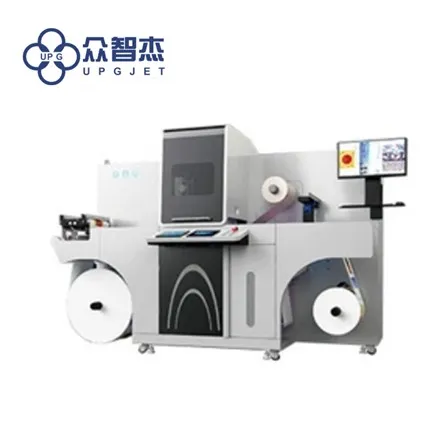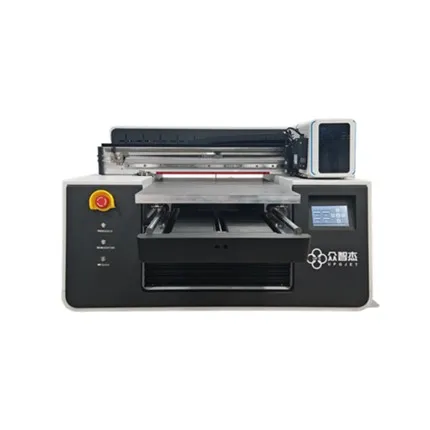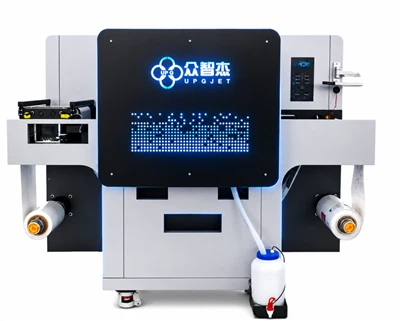

As the demand for customised and high quality fabric designs continues to grow, understanding the differences between these two methods is vital for designers, manufacturers and consumers alike. This article will explore the key differences between screen printing and digital textile printing, with a particular focus on the role of digital textile printers in the modern textile industry, where two dominant methods have emerged in the field of textile printing: screen printing and digitally prevented product printing. Each technique has its own unique advantages, applications and processes for different types of projects.
Screen printing is particularly effective for printing bold, vibrant colours and is widely used to print on all types of materials, including cotton, polyester and blends, screen printing is a traditional printing method that has been used for decades. The process involves making a stencil (or screen) for each colour in the design. The screen is then placed on the fabric and a squeegee is used to push the ink through the mesh.
One of the main advantages of screen printing is the ability to produce large quantities of printed material quickly and efficiently. Once the screen is made, the printing process can be automated, allowing for high volume production. As a result, screen printing is ideal for businesses that need to produce t-shirts, banners and promotional items in large quantities.
However, screen printing has its limitations. The set-up process can be both time-consuming and costly, especially with multi-colour designs. Each colour requires a separate screen, which adds to production time and costs. In addition, screen printing is less flexible than digital printing when working with complex designs or photographic images. This method is best suited for simple graphics and solid colours.
On the other hand, digital textile printing is a relatively new technology that has revolutionised the textile industry. This method uses digital printers to spray ink directly onto the fabric, allowing intricate patterns, gradient colours and photographic images to be printed with stunning accuracy. Digital textile printers use various types of inks, including dye-sublimation inks, reactive inks and pigment inks, depending on the fabric and the desired effect.
You can learn more about this product from our company:

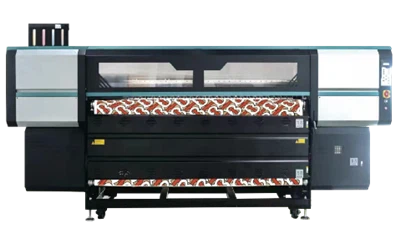
1.9 Meter High Speed Digital Sublimation Printer
● Servo Motor: LEADSHINE (Famous Brand in China)
● Guide Line: HIWIN (Famous Brand in China) or THK (Famous Brand in Japan)
● Cartridge: Original Import (Clean, Pump and Moisturize Automatically)
● Main Board: Design and Produced by ourselves, it is stability and 15Months Warranty time
● Ink Supply System: Bulk Ink Continues Supply System.
One of the most significant advantages of digital textile printing is its ability to produce small batches and customised designs without the use of screens or stencils. This flexibility allows designers to experiment with different patterns and colours without incurring high set-up costs. As a result, digital printing is perfect for small businesses, fashion designers and artists to produce one-of-a-kind pieces.
In addition, digital textile printing is more environmentally friendly than traditional screen printing. Many digital printers use water-based inks, which are less harmful to the environment than the solvent-based inks commonly used in screen printing. Additionally, digital printing produces less waste because there is no need for screens or excess ink.
Set-up and production time: Screen printing requires a lengthy set-up process, especially for multi-colour designs. Each colour requires a separate screen, which can be time-consuming to produce. In contrast, digital textile printing allows designs to be printed instantly, speeding up production for small batches and customised orders.
Cost-effective: For high-volume production, screen printing is often more cost-effective because it allows for quick production of large quantities. However, for small orders or one-off designs, digital textile printing is more economical as it eliminates the need for expensive screens and set-up.
Complexity of design: While screen printing is best suited to simple designs in solid colours, digital textile printing excels at reproducing complex patterns, gradients and photographic images. This makes digital printing the first choice for fashion designers and artists pushing the boundaries of textile design.
Vibrant colours and rich detail: Screen prints are vibrant in colour and thick in texture. However, digital textile printing has a much wider colour gamut and can reproduce subtle details and gradations that are difficult to achieve with screen printing.
Environmental impact: Digital textile printing is often more environmentally friendly, using water-based inks that produce less waste. Screen printing, especially when using solvent-based inks, has a greater environmental impact due to the chemicals involved in the process.
In conclusion, both screen printing and digital textile printing have their unique benefits and features, and screen printing remains a reliable option for the following. If you are interested in screen printing, you can contact our company, over the years, we are committed to the development, production and sales of all kinds of digital printing equipment and related products of professional enterprises.