
In the field of textile printing, the emergence of digital textile printers has brought many changes to the industry, providing new possibilities and efficiencies that traditional methods cannot match, but what are the differences between the two? We need to further understand the differences in technology, process and effect.
Traditional textile printing contains a variety of technologies, including screen printing, block printing and rotary printing, each of which has its own unique characteristics and applications.
1. Screen printing, as one of the most common traditional methods, involves making a template (or screen) for each color in the design, and the ink is deposited on the fabric through the screen. Although screen printing involves setting up for small batches, it may take a lot of time and cost, but screen printing is more suitable for large-scale production and can produce bright colors.
2. Woodblock printing is to carve patterns on wood blocks or other materials, apply ink, and print them on fabrics. Even though template printing can produce complex patterns, it is labor-intensive and not suitable for large-scale production.
3. Rotary printing is faster than screen printing and is usually used for large-scale production. It uses cylindrical screens to continuously print patterns on fabrics. It is faster than screen printing, but, like screen printing, it requires a lot of setup time and has less flexibility in design changes.
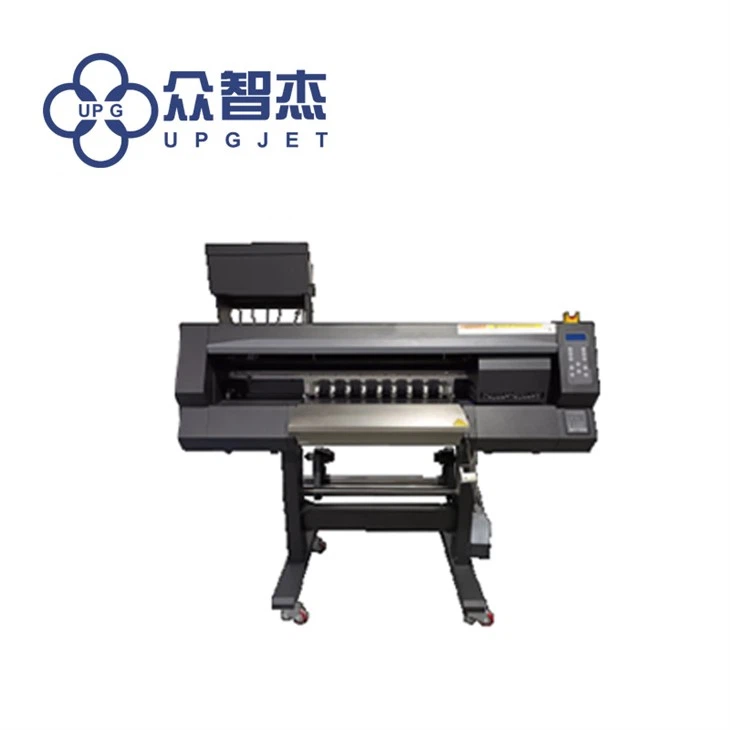
If you are interested, you can check out our company's related products, Pet Film Ink Jet Digital DTF Printer
-General matching
-Simple and easy to use, save labor
-24 hours stable production, Sustainable work
Digital textile printing, on the other hand, is a relatively new technology that uses a digital printer to spray ink directly, similar to how an inkjet printer works on paper. Compared with traditional printing technology, this method has the following points:
1. Speed and efficiency: Digital textile printers can reduce setup time and can be ideal for short-run printing and on-demand printing, allowing designers to react quickly to market trends.
2. One of the significant advantages of digital textile printing is that it can handle complex designs and color changes, and is not limited by traditional methods, so the designed works can better meet customer needs.
3. Traditional printing methods cause a waste of ink and fabric due to the setup process and mass production. Digital printing can accurately apply ink, so digital printing has some advantages in reducing waste.
In terms of quality, traditional textile printing and digital textile printing each have their own advantages. Traditional methods, especially screen printing, are known for producing colorful, durable prints that are ideal for items that need to be durable, such as sportswear and promotional materials.
However, advances in digital printing technology have greatly improved the quality and durability of digital printing. High-resolution digital textile printers can print complex designs with accurate color and rich detail.
Traditional textile printing and digital textile printing each have their own advantages. Traditional methods, especially screen printing, are characterized by bright colors and durability. Ideal for durable items such as sports apparel and promotional materials. Advances in digital printing technology have greatly improved the quality and durability of printing. Because of its high resolution, complex designs can be printed with accurate colors.
Of course, cost is also a very important factor. Traditional methods are more suitable for mass production. Digital printing is more suitable for small batches or customized designs. It does not require a lot of settings and can be produced on demand.
In short, the user's final choice of traumatized textile printing or digital textile printing mainly depends on the specific needs. Traditional methods increase mass production and durability, while digital textile printing machines are more flexible, fast, and reduce waste. As technology continues to advance, the lines between these two approaches may become blurred, resulting in a hybrid approach that combines both.